Japan Prep Guide
2 Days in Kyoto: A Crowd-Smart Itinerary for First-Timers (2026)
Some links on this page earn us a small commission at no extra cost to you. How that works.
Two days is enough to see Kyoto's big four (Fushimi Inari, Kiyomizu-dera, Arashiyama and Kinkaku-ji) without rushing, as long as you split the city east and west and start early. Tour groups and day-trippers fill the famous sights from mid-morning, so this plan puts the busiest places at the edges of the day.
- Day 1 (south & east): Fushimi Inari at 7:00 → Kiyomizu-dera → Sannenzaka and Ninenzaka → Yasaka Shrine → Gion at dusk.
- Day 2 (west & north): Arashiyama Bamboo Grove before 8:00 → Tenryu-ji at 8:30 → Togetsukyo Bridge → Kinkaku-ji in the afternoon.
- Getting around: trains for the long legs (JR to Inari and Saga-Arashiyama), buses only where you have to. Flat bus fare is ¥230.
- Budget for entry fees: roughly ¥1,500–2,500 per adult for the two days. Fushimi Inari and the bamboo grove are free.
Opens Klook in a new tab. Affiliate link: we may earn a commission; your price is the same.
Day 1: Fushimi Inari, Kiyomizu-dera and Gion
7:00 – Fushimi Inari Taisha
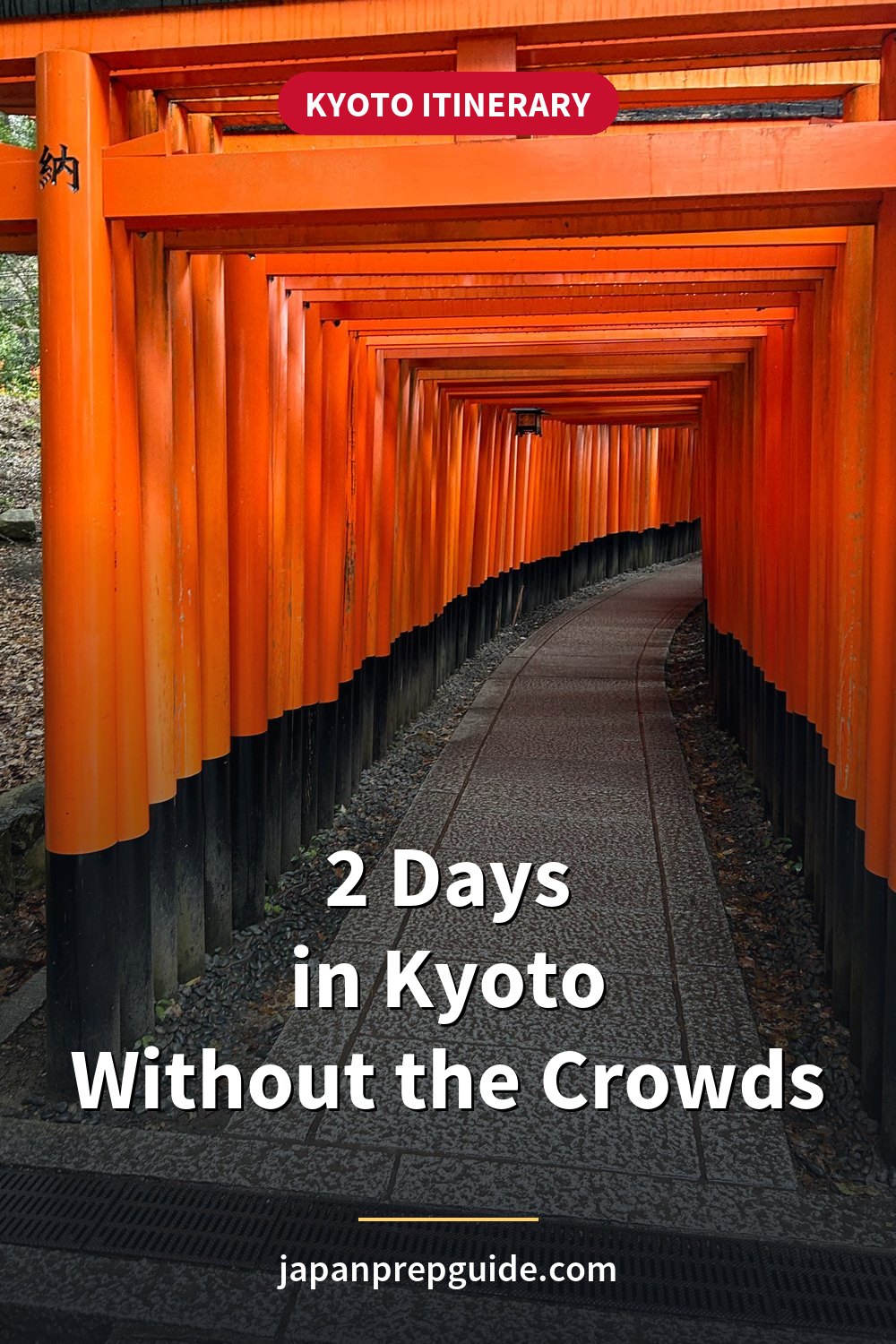
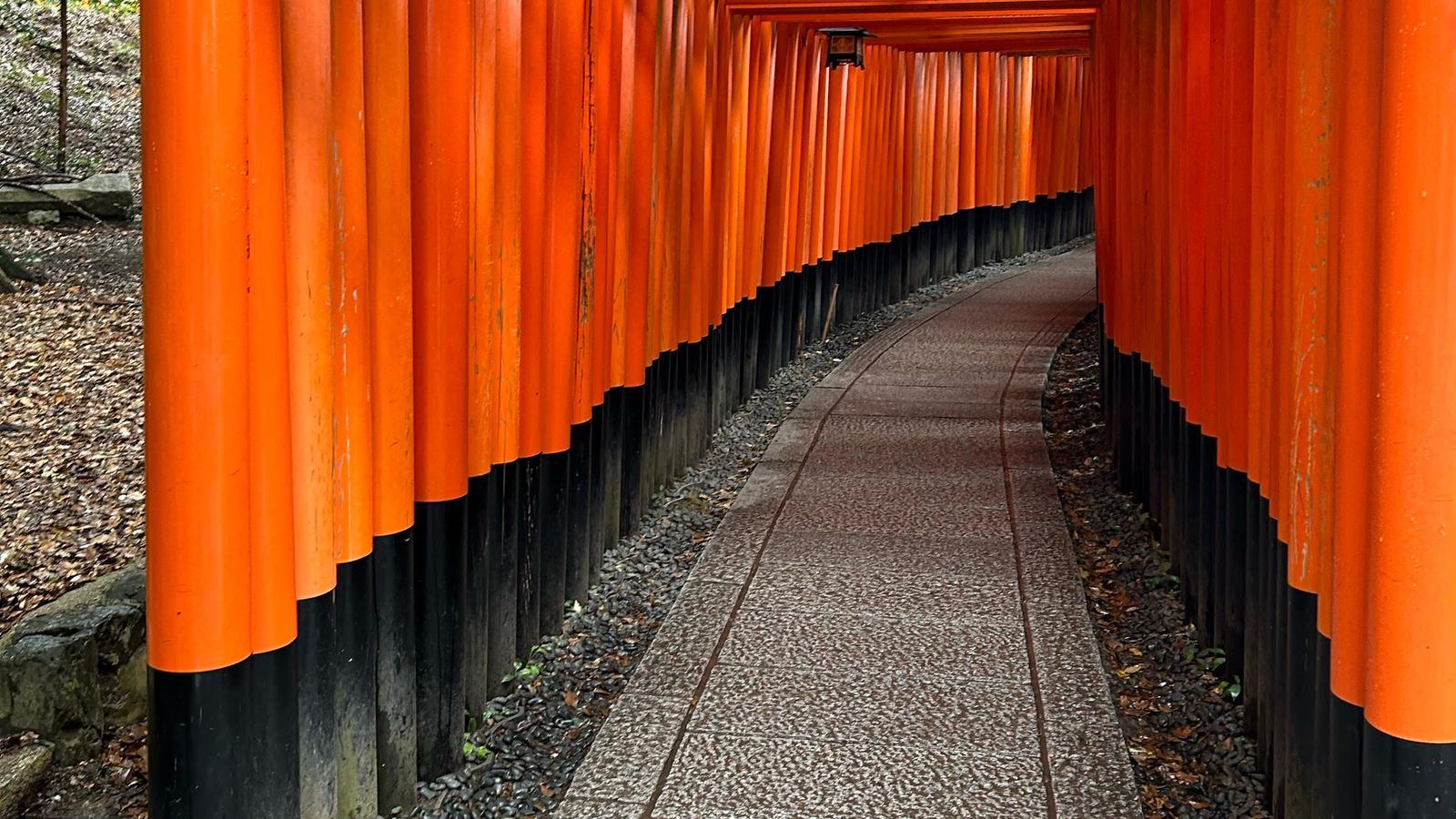
Take the JR Nara Line from Kyoto Station to Inari Station (about 5 minutes); the shrine gate is right outside. The grounds and the torii-lined trails are open around the clock and free, which is why early morning works so well here. By mid-morning the first stretch of the Senbon Torii becomes a slow-moving queue.
You don't need to hike to the 233 m summit. The Yotsutsuji crossroads, roughly 30–45 minutes up, has a view over the city and the crowds thin out sharply after it. Allow about 2 hours in total if you stop there, or 2–3 hours for the full loop.
Want the stories behind the foxes and the gates without a guide? WeGoTrip sells a phone-based self-guided Fushimi Inari audio tour (opens in a new tab) that works offline; bring your own earphones.
10:00 – Kiyomizu-dera
Head back toward Kyoto Station and take a bus or taxi up to Kiyomizu-dera (from Inari, a taxi to the foot of the hill is the least stressful option for a group of three or four). The temple opens at 6:00, with closing times that change by season. Adult admission is about ¥500, and ticket windows are cash-friendly rather than card-friendly, so have coins ready.
If you're visiting November 21–30, 2026, the temple's autumn night viewing runs until 21:30 (last entry 21:00), and the Jojuin garden opens for a special viewing on the same dates. That's a strong reason to flip the order of the day and come back after dark.
11:30 – Sannenzaka, Ninenzaka and lunch
Walk down the stone-paved lanes below the temple. They're crowded, but this is where you'll find snacks, pottery and matcha everything. Eat lunch a little off the main slopes, toward Yasaka Pagoda or Higashiyama's side streets, where queues are shorter.
If you like context with your wandering, WeGoTrip's Higashiyama audio walking tour (opens in a new tab) covers this stretch at your own pace.
Afternoon to dusk – Yasaka Shrine, Maruyama Park and Gion
Yasaka Shrine is free and open late, so it's a relaxed stop after the hills. Around sunset, walk Hanamikoji and the Shirakawa canal area in Gion. Stay on public streets: parts of Gion's side lanes are private roads, and signs there ask visitors not to enter or take photos. Never follow or photograph geiko or maiko up close.
Day 2: Arashiyama and Kinkaku-ji
7:30 – Arashiyama Bamboo Grove
Ride the JR Sagano Line from Kyoto Station to Saga-Arashiyama (about 11 minutes on a rapid train), then walk about 10 minutes to the grove. It's free and open at all hours. Arrive before 8:00 if you want photos without a crowd; in peak season the path fills up quickly after that.
8:30 – Tenryu-ji
Tenryu-ji opens at 8:30 (last entry 16:50), and its north gate connects straight to the bamboo path. The garden costs ¥500 for adults, plus ¥300 to enter the halls. One thing to check: the temple lists scheduled closures on October 29–30, 2026, so pick another day if those dates are in your plan.
10:30 – Togetsukyo Bridge and lunch
Walk down to the river, cross Togetsukyo and have an early lunch in Arashiyama before the day-trippers arrive. In late autumn the hills behind the bridge turn red. Kyoto's maple peak usually falls from mid-November to early December, and the 2026 forecasts point to a late season (see our autumn leaves 2026 guide).
Afternoon – Kinkaku-ji (Golden Pavilion)
Take a taxi or a city bus north to Kinkaku-ji. It's open 9:00–17:00 every day, and admission is ¥500 for adults and ¥300 for elementary and junior high students. The visit is a one-way loop of about 30–45 minutes, so it fits neatly into a late afternoon. Afterward, buses 102 and 204 run from Kinkakuji-michi to Ginkakuji-michi if you still have energy for the Silver Pavilion and the Philosopher's Path.
Entry fees and hours at a glance
| Sight | Hours | Adult fee | Best time |
|---|---|---|---|
| Fushimi Inari Taisha | Grounds open 24 hours | Free | Before 8:00 |
| Kiyomizu-dera | From 6:00; closing varies by season | About ¥500 | Opening time or the Nov 21–30 night viewing |
| Arashiyama Bamboo Grove | Open at all hours | Free | Before 8:00 |
| Tenryu-ji | 8:30–17:00 (last entry 16:50) | ¥500 garden (+¥300 halls) | At opening |
| Kinkaku-ji | 9:00–17:00 | ¥500 | Late afternoon |
| Ginkaku-ji (optional) | 8:30–17:00 (Mar–Nov), 9:00–16:30 (Dec–Feb) | ¥1,000 | Late afternoon |
Getting around Kyoto in two days
Kyoto's buses are the main reason first-timers lose time. A single ride costs a flat ¥230 for adults in the central zone, and the popular routes to Kiyomizu-dera and Kinkaku-ji are often packed. This plan uses the train for the long legs instead.
- IC card: Suica, PASMO and ICOCA all work on Kyoto's trains, subway and buses. Our Suica and PASMO guide explains which card to get.
- Subway & Bus 1-Day Pass: ¥1,100 for adults. It only pays off if you take about five rides that day, which this itinerary usually doesn't. The old ¥700 bus-only pass is no longer sold.
- Taxis: for three or four people, a short taxi hop (say, Inari to Kiyomizu) is worth pricing up: split between you, it often isn't much more than the bus and it saves a lot of time.
- Coming up: Kyoto City has proposed higher bus fares for non-residents from fiscal 2027 (reported at around ¥350–400). It isn't in effect yet.
Arriving or leaving with suitcases? Station lockers at Kyoto Station fill up early. You can book luggage storage near Kyoto Station on Radical Storage (opens in a new tab) and collect your bags after Kinkaku-ji. Coming straight from the airport? See Kansai Airport to Kyoto.
Where to stay (and the 2026 hotel tax)
Stay near Kyoto Station for the easiest train connections, or near Shijo/Kawaramachi to be close to Gion in the evening. Since March 1, 2026, Kyoto's accommodation tax is charged per person, per night, based on the room rate:
| Room rate per person, per night | Tax |
|---|---|
| Under ¥6,000 | ¥200 |
| ¥6,000–19,999 | ¥400 |
| ¥20,000–49,999 | ¥1,000 |
| ¥50,000–99,999 | ¥4,000 |
| ¥100,000 and over | ¥10,000 |
Some hotels and booking sites collect it separately at check-in, so check whether it's included in your booking total.
Compare Kyoto hotels on Klook (opens in a new tab)
Questions about 2 days in Kyoto
Is 2 days in Kyoto enough?
It's enough for the main highlights and one evening in Gion. With a third day, add Nara (under an hour by train) or a slower morning at Ginkaku-ji and the Philosopher's Path. More ideas are in our guide to day trips from Osaka, most of which also work from Kyoto.
Should I do Fushimi Inari or Kiyomizu-dera first?
Fushimi Inari, because it's free and open all night, so you can be there at 7:00. Kiyomizu-dera also opens early, at 6:00. During the November night viewing, save it for the evening.
Do I need to book anything in advance?
Not for these temples. You buy tickets at the gate. Book your hotel early for November, and reserve any guided night tour or kimono rental ahead on autumn weekends.
Is the JR Pass useful for Kyoto sightseeing?
Only a little. It covers the JR lines to Inari and Saga-Arashiyama, but not the subway or city buses. Whether it pays off depends on your long-distance trips; see is the JR Pass worth it.
How we'd tweak it for autumn
In late November, keep the early starts and swap the evenings: Kiyomizu-dera's night viewing on day 1, and an early dinner in Arashiyama on day 2 instead of a late one in town. The leaves draw the biggest crowds of the year, so the 7:00 alarm matters more than any other tip here.
Related guides
Save this guide for later