Japan Prep Guide
Japanese Candy Guide: DIY Kits, Hi-Chew, Meiji and What to Gift
Some links on this page earn us a small commission at no extra cost to you. How that works.
Japanese candy is a popular gift because it looks fun, travels well and is hard to match at home. But "Japanese candy" covers very different things: DIY kits that kids assemble with water, chewy candies with flavors that only exist in one region, chocolate snacks shaped like mushrooms, and tiny sugar stars made by hand in Kyoto. This guide sorts them by who they suit and where you can actually buy them.
Quick answer: for kids, buy Kracie Popin' Cookin' DIY kits (water-activated candy that looks like sushi, ramen or donuts). For candy fans, bring back regional Hi-Chew, which Morinaga sells mainly at airports, stations and souvenir shops in each region. For a classic everyday pick, Meiji Kinoko no Yama / Takenoko no Sato. For a traditional, giftable sweet, konpeito sugar candy. If you can't travel, a monthly box shipped from Japan such as TokyoTreat (opens in a new tab) is the easiest way to get a changing mix of candy and snacks.
Japanese candy at a glance
| Candy | Maker | Best for | Where to buy in Japan | Easy to find abroad? |
|---|---|---|---|---|
| Popin' Cookin' DIY kits | Kracie | Kids, birthday party favors | Supermarkets, discount stores, toy aisles | Some kits yes (US versions exist); many Japan-only kits no |
| Hi-Chew (regional flavors) | Morinaga | Candy fans, office gifts | Airports, stations, roadside stations in each region | Standard flavors yes; regional ones rarely |
| Kinoko no Yama / Takenoko no Sato | Meiji | Everyone; cheap and fun | Any convenience store or supermarket | Sometimes in Asian grocery stores |
| Konpeito | Kyoto specialist shops and others | Traditional, elegant gift | Kyoto sweet shops, department store food halls | Rarely the handmade kind |
| Gummies and soft candy (Puccho, Kororo, Milky) | UHA Mikakuto, Fujiya | Mixing into a gift bag | Convenience stores, supermarkets | Patchy |
DIY candy kits: Popin' Cookin' and friends
Kracie's Popin' Cookin' range is the candy most people abroad picture when they hear "Japanese DIY candy". Each pack contains powders, a plastic tray and sometimes a small mold: you add water, stir and shape the result into miniature sushi, ramen, burgers, donuts or bento. Kracie lists the kits on its English site under "DIY Candy For Kids", and the range also includes Japan-oriented themes such as a festival-food (matsuri) kit.
What to know before you buy:
- US versions and Japanese versions differ. Several kits are now sold in US grocery chains with English packaging, so if you are shopping for a child in the US, check whether the kit you want is already available locally before carrying it home.
- Instructions on Japanese packs are in Japanese. The steps are shown in pictures, so this is rarely a problem.
- They are made for fun, not flavor. Kids love making them; adults usually find the taste very sweet.
Other "make it yourself" sweets you'll see next to them include Nerunerune (also Kracie), a color-changing dough candy that has been around for decades in Japan.
Hi-Chew: which flavors are Japan-only?
Morinaga's Hi-Chew is now sold in many countries, so the standard strawberry or grape packs are not much of a souvenir. The interesting ones are the regional editions. Morinaga's own souvenir page lists flavors tied to one area, for example Yubari melon in Hokkaido, an apple flavor for Tohoku, Amaou strawberry in Kyushu and mango in Okinawa, plus Mt. Fuji themed packs. They are sold mostly at airports, train stations, roadside stations and souvenir shops in that region, not in every convenience store.
Regional lineups change, so treat any list (including this one) as a starting point and check Morinaga's regional souvenir page (opens in a new tab) before a trip. Regional editions are also why departure-airport shops are a good last stop: they often stock souvenir candy from several parts of Japan.
Meiji and other konbini chocolate candy
Meiji's Kinoko no Yama (chocolate "mushrooms" on cracker stems) and Takenoko no Sato (chocolate "bamboo shoots" on cookie bases) are cheap, sold everywhere, and come with a long-running friendly rivalry in Japan over which one is better. Buying one box of each makes a small, funny gift. Look out for seasonal versions too; Japanese chocolate makers release autumn and winter flavors that are only on shelves for a few months.
If chocolate is the main interest, our guide to Japanese KitKat flavors covers the regional KitKat editions and where each one is sold. For a walk through convenience-store shelves in general, see the Japanese convenience store guide.
Traditional candy: konpeito and wagashi
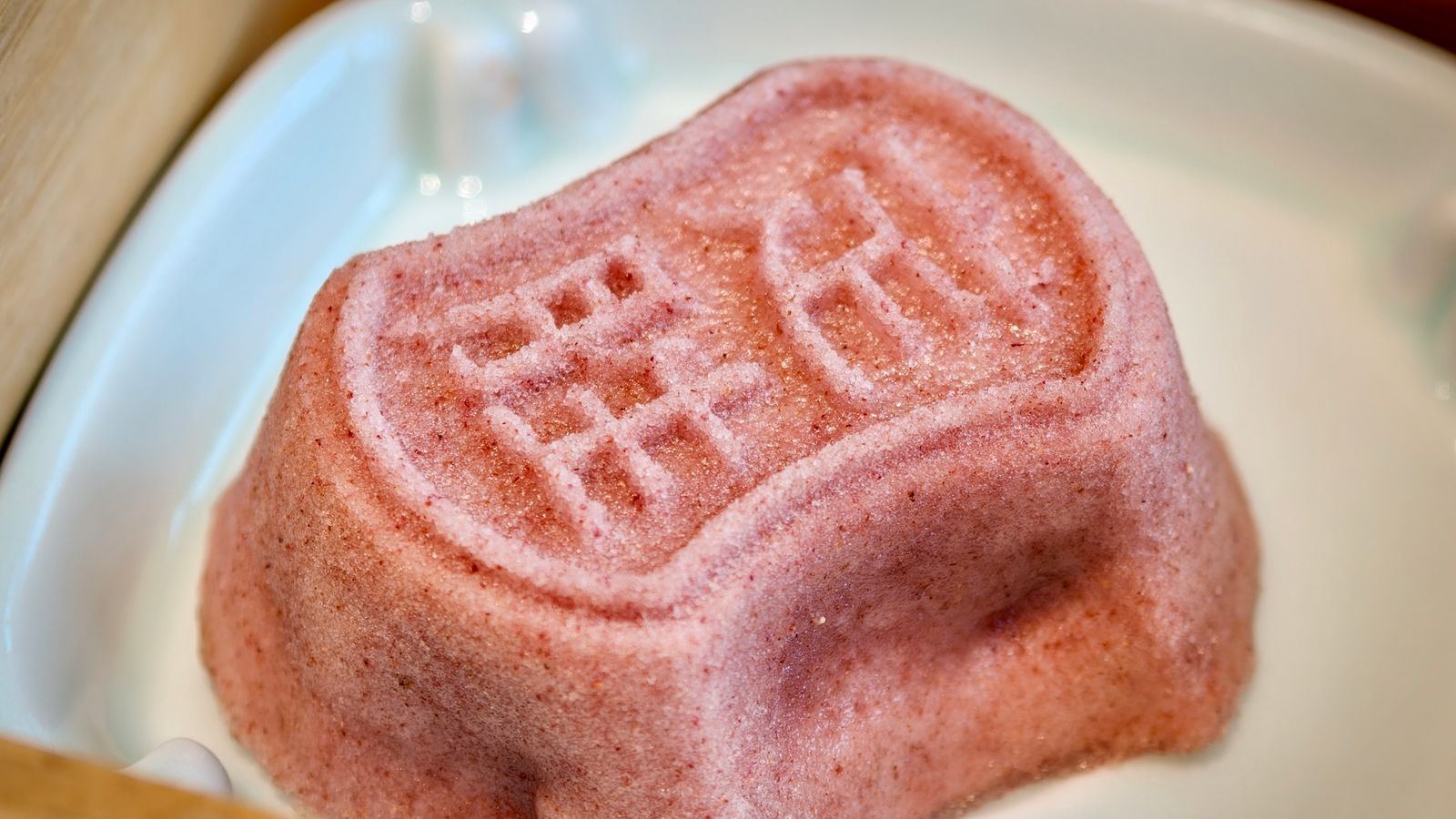
Konpeito are small star-shaped sugar candies that came to Japan with Portuguese traders centuries ago. Mass-produced konpeito is cheap and easy to find, but the handmade kind takes many days of slowly coating sugar in a rotating pan, which is why it costs more and makes an elegant gift. In Kyoto, Ryokujuan Shimizu near Kyoto University is known as a specialist konpeito shop; listings show it opening during the day and closing on Wednesdays, so check its official site before you go.
If you'd like help finding traditional sweets in a city you don't know, a guided food walk through a market and department store food hall (depachika) is a practical option, for example this Kyoto Nishiki Market and depachika food tour (opens in a new tab) or the Tsukiji food walking tour (opens in a new tab) in Tokyo. Check what each tour includes before booking.
See the Kyoto depachika food tour dates (opens in a new tab)
Buying Japanese candy from outside Japan
If you are not traveling, you have three realistic options:
- Local Asian grocery stores: cheapest for everyday candy, but limited flavors and almost no regional editions.
- Online candy shops shipping from Japan: wider choice of single items such as specific DIY kits; compare shipping costs, which can exceed the candy's price.
- Subscription snack boxes: a monthly box with a theme. TokyoTreat (opens in a new tab) focuses on candy, konbini snacks and limited flavors, while Sakuraco (opens in a new tab) focuses on traditional sweets, tea and regional snacks. You don't choose individual items. Our TokyoTreat vs Sakuraco comparison explains the differences.
Regional souvenirs with a short shelf life, such as fresh cakes, usually can't be shipped this way; see Japanese snacks that are hard to find outside Japan for which ones you really have to buy in person.
Japanese candy: frequently asked questions
What is the most popular Japanese candy to bring home?
There's no official ranking, but Hi-Chew, Meiji's mushroom and bamboo-shoot chocolates, KitKat regional flavors and Popin' Cookin' kits are among the candies most often recommended as gifts, because they are cheap, light and recognizably Japanese.
Can I take Japanese candy home in my luggage?
Packaged, shop-bought candy is generally allowed in many countries, but rules differ (some countries restrict meat- or dairy-based products, and some require declaring food). Check your own country's customs rules before you fly, and keep candy sealed in its original packaging.
Are Popin' Cookin' kits safe to eat?
They are sold as confectionery for children in Japan and abroad. Read the ingredient and allergen list on the pack (Japanese packs list allergens in Japanese), and supervise young children because the kits include small parts.
Where is the cheapest place to buy Japanese candy in Japan?
Supermarkets and discount stores are usually cheaper than convenience stores or airport shops. Airports and stations are where you'll find regional souvenir editions, though, so it's worth buying everyday candy in town and regional candy on the way out.
Bottom line
Match the candy to the person: DIY kits for kids, regional Hi-Chew or KitKat for candy collectors, Meiji chocolates as a cheap crowd-pleaser, and handmade konpeito for someone who appreciates tradition. Buy regional editions where they are made, and if you can't travel, a snack box from Japan is the simplest way to keep trying new ones.
Check this month's TokyoTreat box (opens in a new tab)
Related guides
Save this guide for later