Japan Prep Guide
15 Japanese Snacks That Are Hard to Find Outside Japan
Some links on this page earn us a small commission at no extra cost to you. How that works.
You can buy Pocky almost anywhere now, but a big part of Japan's snack culture never leaves the country. Some treats are regional souvenirs sold mainly in one prefecture. Some have a shelf life of about a week. Others are seasonal flavors that disappear within a month or two. Here are 15 worth hunting for, and realistic ways to try them from home.
The hardest Japanese snacks to get abroad are regional omiyage (Tokyo Banana, Shiroi Koibito, yatsuhashi), seasonal and limited flavors (sakura, chestnut, regional KitKats) and fresh wagashi. Everyday konbini snacks like Jagarico or Black Thunder turn up in some Japanese grocery stores abroad, but the range is small. If you can't fly to Japan, a monthly box shipped from Japan is the simplest way to sample them: TokyoTreat for konbini and limited flavors, Sakuraco for traditional and regional sweets. Neither can include very short-shelf-life cakes like Tokyo Banana, which you really do have to buy in Japan.
Opens the partner site in a new tab. Affiliate link: we may earn a commission; your price is the same.
The 15 snacks at a glance
"Hard to find" means different things: some snacks are simply not exported, while others are exported in tiny numbers or only in one flavor. Here's why each one is tricky, and the most realistic way to get it.
| Snack | From | Why it's hard to find abroad | Easiest way to try |
|---|---|---|---|
| Tokyo Banana | Tokyo | Fresh sponge cake, shelf life of roughly a week | Tokyo stations and Haneda/Narita airports |
| Shiroi Koibito | Hokkaido | Sold mainly in Hokkaido and at some airports | New Chitose Airport, Hokkaido stores |
| Yatsuhashi | Kyoto | Soft (nama) version keeps only a short time | Kyoto Station and Kyoto sweet shops |
| Momiji manju | Hiroshima / Miyajima | Regional souvenir, rarely exported | Miyajima, Hiroshima Station |
| Beni-imo tart | Okinawa | Regional souvenir | Naha airport and Okinawa shops |
| Jagarico | Nationwide | Limited and regional flavors stay in Japan | Konbini, or a snack box |
| Umaibo | Nationwide | Dozens of flavors; only a few exported | Konbini and supermarkets |
| Kaki no Tane | Nationwide | Exported, but special flavors aren't | Supermarkets, snack boxes |
| Kinoko no Yama / Takenoko no Sato | Nationwide | Small runs abroad, seasonal versions stay home | Konbini |
| Black Thunder | Nationwide | Limited flavors rarely leave Japan | Konbini, snack boxes |
| Regional potato chips | By prefecture | Made for local markets | Station kiosks, snack boxes |
| Regional KitKats | By region | Many flavors are Japan-only or region-only | Airports, konbini, snack boxes |
| Sakura snacks | Spring only | Sold for a few weeks a year | Japan in March–April, spring boxes |
| Chestnut and sweet potato snacks | Autumn only | Seasonal releases | Japan in autumn, autumn boxes |
| Fresh wagashi | Nationwide | Best eaten the same day | Department-store food halls |
Regional souvenir sweets (omiyage)
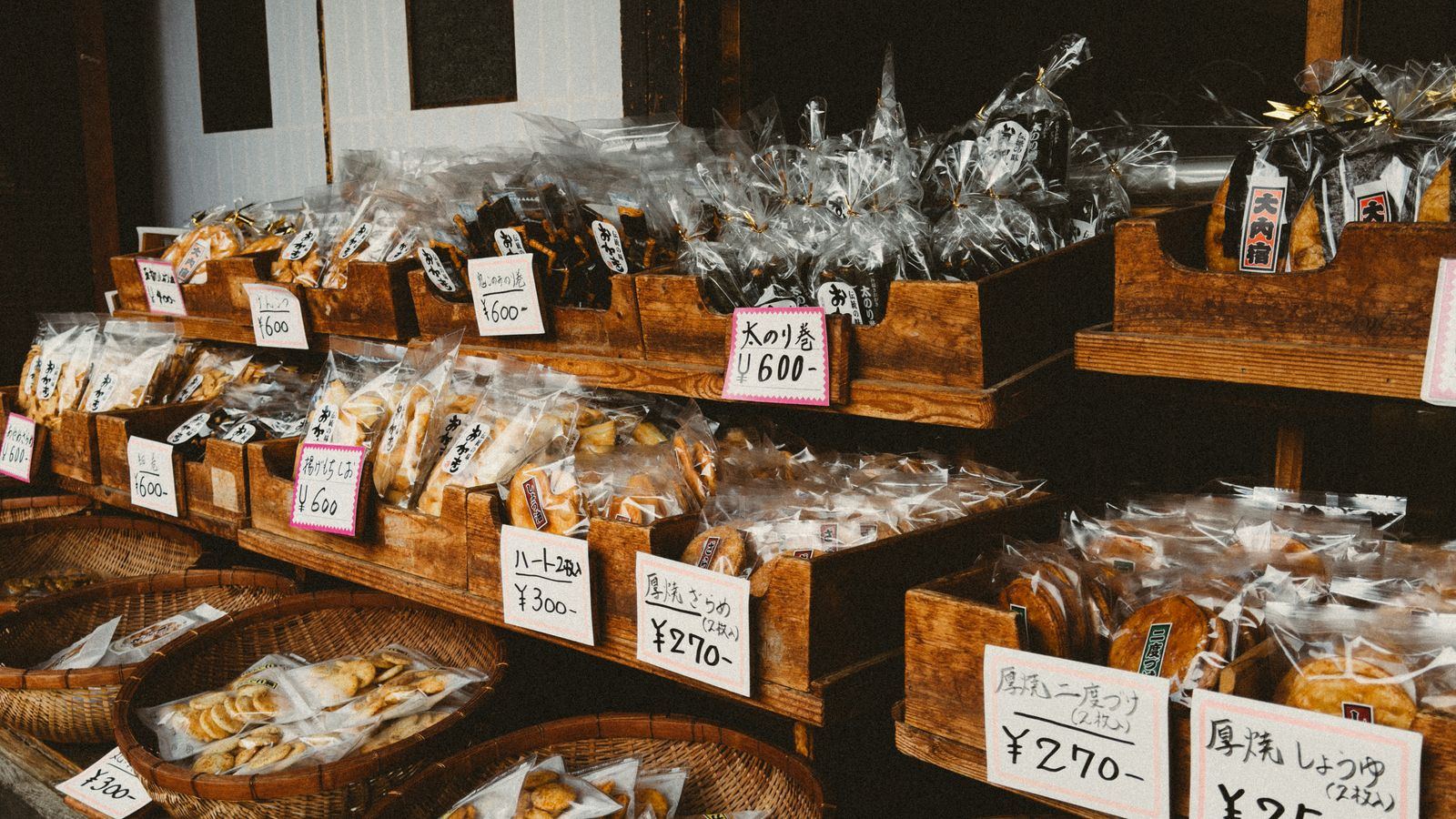
In Japan you bring a local sweet back for friends and coworkers after a trip, so every region has a signature treat. Many are sold mainly in their home region and at transport hubs, which is exactly why they're hard to find overseas.
- Tokyo Banana: banana-shaped sponge cake with banana custard. Sources put its shelf life at about a week, so buy it close to your flight home.
- Shiroi Koibito: thin langue de chat biscuits around white chocolate, made by Ishiya in Sapporo. It keeps well, which makes it a classic gift to fly home with.
- Yatsuhashi: Kyoto's cinnamon rice-flour sweet, either crisp and baked or soft and folded around red bean paste.
- Momiji manju: maple-leaf cakes filled with bean paste, custard or chocolate, closely linked with Miyajima.
- Beni-imo tart: small tarts made with Okinawan purple sweet potato.
Convenience-store and supermarket favorites
These are everyday snacks in Japan, and some do reach Japanese grocery stores abroad. Only a few core flavors get exported, though, while Japan sees a steady stream of limited editions. Our Japanese convenience store guide explains what to look for if you're visiting.
- Jagarico: crunchy potato sticks in a cup, with flavors that rotate constantly.
- Umaibo: cheap puffed corn sticks in dozens of flavors, a childhood classic.
- Kaki no Tane: spicy crescent rice crackers mixed with peanuts.
- Kinoko no Yama / Takenoko no Sato: chocolate "mushrooms" and "bamboo shoots", subject of a long-running friendly rivalry.
- Black Thunder: a chocolate-coated cocoa cookie bar with a cult following.
- Regional potato chips: limited flavors themed on local dishes from different prefectures.
Seasonal and limited-edition flavors
- Japanese KitKats: matcha is the famous one, but Japan has released hundreds of regional and seasonal flavors over the years, many sold only in Japan. Our Japanese KitKat flavors guide covers the regional ones and where to buy them.
- Sakura snacks: in spring, chocolate, cookies and drinks get pink cherry-blossom versions for a few weeks.
- Chestnut and sweet potato: autumn editions of chocolates and cakes appear from around September.
- Winter Pocky: Glico's winter-only lines, Fuyu no Kuchidoke and Fuyu no Kirameki Pocky, returned in a renewed recipe on October 6, 2026 and usually stay on shelves only through the cold months.
- Tie-in editions: limited runs like the KitKat Spider-Man NY Cheesecake flavor (released in Japan on August 1, 2026) sell out and are rarely exported.
- Wagashi: traditional sweets shaped and colored for the season, best fresh from a confectioner.
How to try them without going to Japan
Regional and seasonal snacks are the hardest to import yourself. The simplest route is a subscription box that ships from Japan and builds each month around a season or region. Prices below are from the brands' sites in October 2026 and exclude shipping (TokyoTreat lists about $12.50 per box to the US).
| Box | Focus | Price per box | Good for |
|---|---|---|---|
| TokyoTreat | Konbini snacks, limited KitKats, ramen, drinks | About $32.50–37.50 + shipping | Limited flavors and fun candy |
| Sakuraco | Traditional sweets, tea, small homeware item | About $32.50–37.50 + shipping | Regional and traditional treats |
| Bokksu | Snacks from smaller makers, plus tea | About $33–40 + shipping | Artisanal and regional snacks |
TokyoTreat (opens in a new tab) is the closer match for konbini favorites and limited editions, while Sakuraco (opens in a new tab) leans toward regional and traditional sweets. Bokksu (opens in a new tab) (we don't earn from this link) is another strong option for snacks from small producers. None of them can promise a specific snack from the list above, because contents change monthly.
See this month's TokyoTreat limited-flavor box (opens in a new tab)
Comparing the two Japan-shipped boxes? See TokyoTreat vs Sakuraco, or our snack box gift guide if you're buying for someone else. Looking for candy specifically (DIY kits, regional Hi-Chew)? Try the Japanese candy guide.
Buying them in Japan
If you're visiting, station kiosks and airport shops carry most regional souvenirs, and convenience stores rotate limited flavors constantly. A department-store food hall (depachika) is the best one-stop shop for omiyage and fresh wagashi. Buy short-shelf-life cakes on your last day, and check your home country's rules on bringing food back.
Where to look for each type:
- Tokyo Banana and other Tokyo omiyage: the souvenir shops inside Tokyo Station and the airport shops at Haneda and Narita, so you can buy on the way home.
- Limited KitKats, Jagarico and Black Thunder flavors: any convenience store; new flavors usually show up on the front shelves near the register. See how Japanese konbini work.
- Yatsuhashi and fresh wagashi: Kyoto Station's souvenir floors, Nishiki Market and the department-store food halls downtown. If you'd rather have someone explain what you're tasting, Klook lists a 2-hour Nishiki Market and depachika food tour in Kyoto (opens in a new tab) with a local guide.
- Shiroi Koibito: New Chitose Airport and shops across Hokkaido; it travels well, so it's fine to buy early in a winter Hokkaido trip.
Snack questions
Can I order Tokyo Banana online from abroad?
Not easily. It's a fresh cake with a short shelf life, so it's mainly sold in Tokyo. Some resellers list it online, but check dates and shipping times carefully.
Are Japanese KitKats sold in the US or UK?
A few flavors, especially matcha, appear in Asian grocery stores and online. Most regional and seasonal flavors are sold only in Japan.
Will a snack box include these exact snacks?
Not guaranteed. Boxes change theme every month, so think of them as a way to sample this kind of snack rather than order a specific item.
Do these snacks contain common allergens?
Often. Wheat, soy, milk, egg and nuts are common. The snack boxes include ingredient and allergen notes, but check labels carefully for serious allergies.
Fly there, or have it shipped
The snacks that never leave Japan are mostly regional, seasonal or fresh. If you're going, one station kiosk or depachika covers most of this list. If you're not, a box shipped from Japan is the easiest way to taste the limited flavors, as long as you don't mind surprises.
Related guides
Save this guide for later